
Strategic Plans
The Beginning of Our Strategic Plan:
At the Psychological and Developmental Relief Society, our strategic plans chart a path from immediate action to sustainable impact. Following the official launch in February 2026, our primary focus is on establishing specialized, fully equipped teams capable of delivering high-quality psychological and developmental support. Our planning balances ambition with flexibility, ensuring that despite the complexities of the Gaza context, every step is deliberate, evidence-based, and resilient.
A. Key Phases :
February – March 2026: Establishment of specialized teams and operational units to deliver integrated services.
Q1 – Mid 2026: Implementation of 5 pre-planned projects addressing urgent psychosocial and developmental needs.
Mid 2026: Launch of the Emergency Support Program for displaced or medically vulnerable Palestinians outside Gaza, including continuous mental health and medical follow-up.
01.
Institutional Launch
Formal activation of the Society’s operations following legal registration and institutional readiness.
02.
Specialized Team Formation
Establishment of multidisciplinary teams, including psychological, medical, developmental, and field-based units.
03.
Capacity Development
Training and professional development of staff and volunteers to ensure ethical, evidence-based, and high-quality service delivery.
04.
Operational Framework
Finalization of internal systems, operational protocols, safety procedures, and coordination mechanisms
05.
Program Readiness
Completion of technical program designs and implementation plans for priority interventions.
06.
Project Implementation
Execution of five high-impact psychological and developmental projects by mid-2026.
07.
Emergency Program Development
Design and launch of a targeted emergency program to support Gaza patients outside Palestine, integrating intensive psychosocial support with continuous medical follow-up.
08.
Resource Mobilization
Securing core funding and building strategic partnerships to support program implementation and institutional sustainability.
Contextual Challenges
The Society operates within a highly unstable environment characterized by recurrent armed hostilities, political fragmentation, the absence of effective local governance in Gaza, and persistently elevated security risks. These conditions necessitate cautious, flexible, and context-sensitive operational planning while maintaining service quality and staff safety.
Risk Management
Continuous assessment and mitigation of security, political, and operational risks inherent in conflict-affected settings.
Monitoring & Learning
Strengthening Monitoring, Evaluation, Accountability, and Learning (MEAL) systems to support evidence-based decision-making.
Adaptive Planning
Ongoing adjustment of timelines and activities in response to evolving security and humanitarian conditions.
Sustainable Growth
Laying the foundation for long-term institutional development, scalability, and future regional expansion.
Strategic Approach All challenges are addressed through proactive risk management, phased program implementation, and scenario-based planning. This approach minimizes operational losses, safeguards beneficiaries and staff, and ensures the continuity of essential psychological and developmental humanitarian services.
Strategic Plans 2026 The 2026 Strategic Plan of the Psychological and Developmental Relief Society is built on phased institutional growth, operational readiness, and adaptive humanitarian response. The plan reflects a realistic and flexible approach designed to ensure effective implementation within a highly complex and volatile operating environment.
01.
Institutional Activation
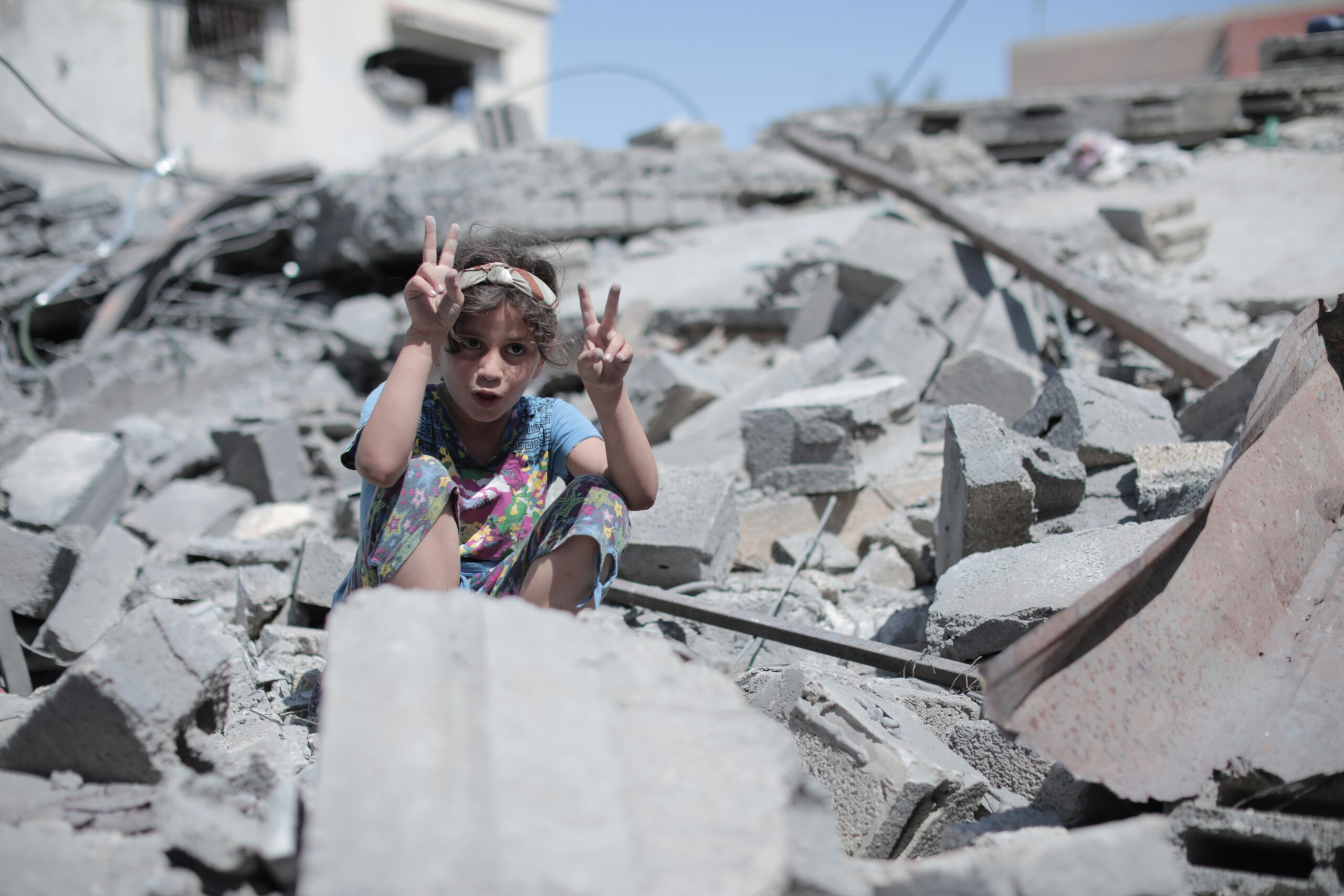
The launch phase represents the Society’s transition from groundwork and emergency response into a fully institutionalized humanitarian organization. During this stage, governance bodies, executive committees, and internal control mechanisms are formally activated in line with approved bylaws and institutional policies. This phase establishes a stable administrative and ethical foundation that ensures legitimacy, accountability, and alignment between strategic direction and operational execution.
02.
Specialized Workforce Development
The Society places strong emphasis on building fully integrated, multidisciplinary teams as the cornerstone of effective humanitarian response. Specialized units are formed across psychology, psychiatry, medical services, social work, project management, and field coordination. Each team operates within a clearly defined structure, ensuring professional accountability, coordinated decision-making, and the delivery of high-quality, context-sensitive interventions.
![[]](https://pdrsociety.org/wp-content/uploads/2026/02/unnamed-file.jpg "Strategic Plans")

03.
Institutional Capacity Strengthening
Sustained capacity building is embedded within the Society’s strategic planning. Continuous professional development, technical supervision, and leadership mentoring are prioritized to ensure staff readiness in complex and high-risk environments. Training frameworks focus on evidence-based practice, safeguarding, ethical compliance, and emergency mental health response, enabling teams to operate effectively under evolving field conditions.
04.
Operational Systems & Controls
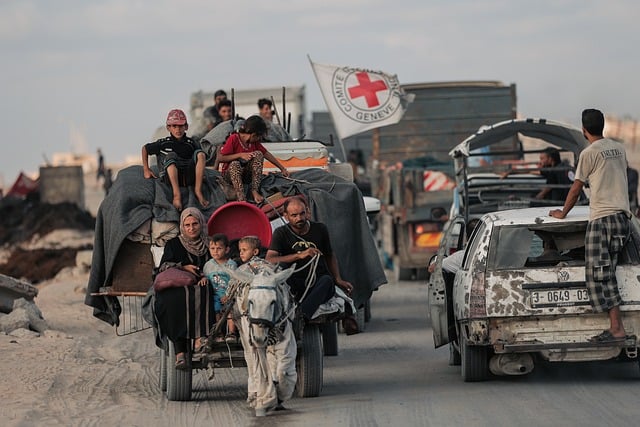
The Society establishes robust operational systems that govern all programmatic and administrative functions. This includes standardized operating procedures, safety and security protocols, financial controls, and internal coordination mechanisms. These systems are designed to minimize risk, enhance efficiency, and ensure consistency across all geographical locations and operational contexts.
05.
Program Design & Readiness
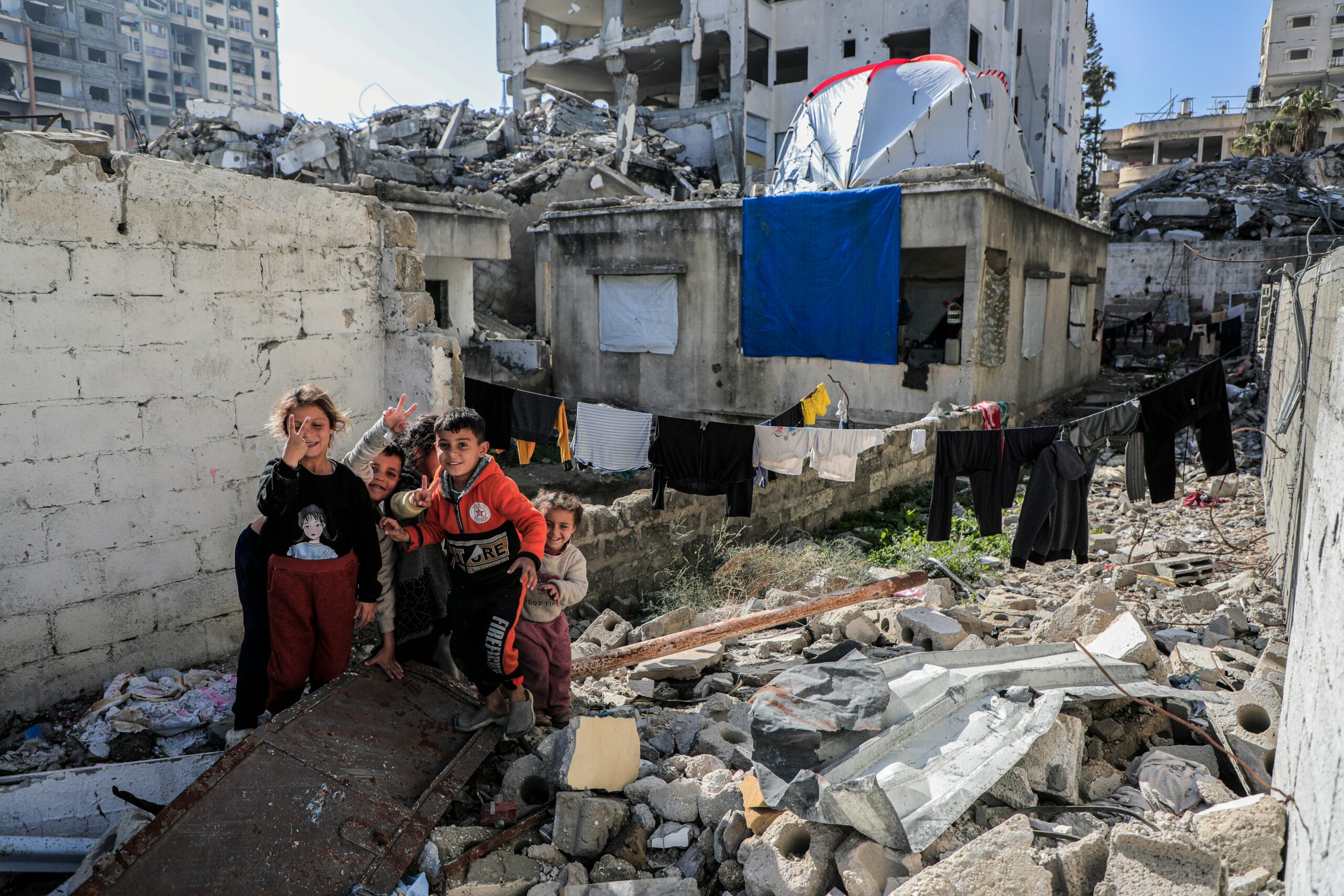
All interventions undergo a structured program readiness process prior to implementation. This includes technical design, needs assessments, risk analysis, and alignment with international standards in mental health and humanitarian action. Programs are developed to be scalable, measurable, and adaptable, ensuring relevance and effectiveness even amid rapidly changing circumstances.
06.
Targeted Project Implementation
By mid-2026, the Society aims to implement five prioritized psychological and developmental projects identified through field analysis and community needs assessments. These projects are designed to address acute psychological distress while contributing to longer-term recovery and resilience. Implementation follows phased approaches, allowing for quality assurance, continuous monitoring, and adaptive management.
07.
Emergency Mental Health Initiative
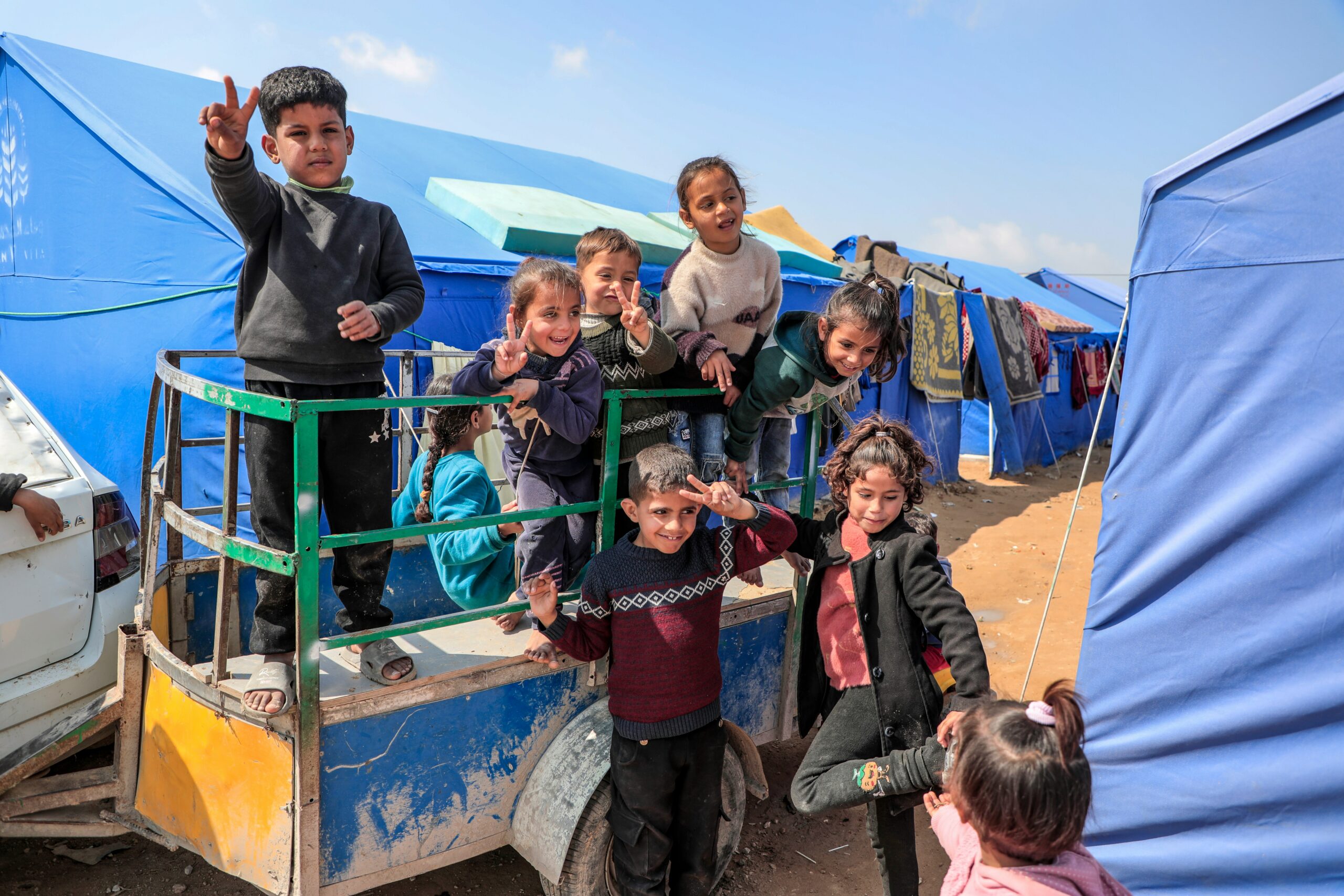
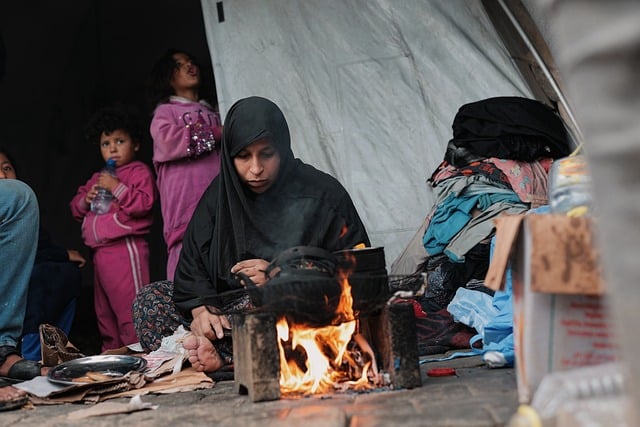
A core strategic priority is the establishment of a specialized emergency program targeting Gaza patients receiving treatment outside Palestine who require intensive psychological support alongside ongoing medical care. This initiative addresses severe trauma, prolonged displacement stress, and complex health-related psychological conditions through integrated, multidisciplinary intervention models.
08.
Strategic Resource Mobilization
Recognizing the challenges of operating in fragile contexts, the Society adopts a proactive and diversified resource mobilization strategy. Efforts focus on securing core institutional funding alongside project-based grants, while maintaining full transparency and compliance with donor requirements. Strategic partnerships are pursued to enhance financial sustainability and operational resilience.
Risk & Context Management
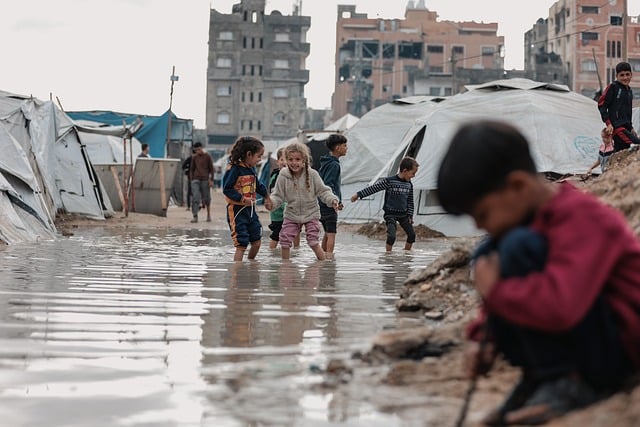
The Society operates within a highly volatile political and security environment. Continuous context analysis and risk assessment guide operational decisions, with particular attention to staff safety, beneficiary protection, and program continuity. Risk mitigation strategies are embedded across all levels of planning to ensure responsible and realistic implementation.
Monitoring, Accountability & Learning
Strong Monitoring, Evaluation, Accountability, and Learning (MEAL) systems support evidence-based decision-making and continuous improvement. The Society collects and analyzes data to measure impact, incorporate beneficiary feedback, and refine interventions, reinforcing accountability to communities, partners, and donors alike.
Adaptive & Flexible Planning
Given ongoing instability and uncertainty, the Society applies adaptive planning as a core management principle. Implementation timelines, delivery modalities, and operational priorities are regularly reviewed and adjusted in response to field realities, ensuring responsiveness while safeguarding program integrity and institutional credibility.
Monitoring, Accountability & Learning
Strong Monitoring, Evaluation, Accountability, and Learning (MEAL) systems support evidence-based decision-making and continuous improvement. The Society collects and analyzes data to measure impact, incorporate beneficiary feedback, and refine interventions, reinforcing accountability to communities, partners, and donors alike.
Sustainable Institutional Growth Beyond immediate response, the Society’s strategic outlook focuses on long-term institutional development. This includes strengthening governance, expanding technical expertise, enhancing regional presence, and positioning the Society as a credible reference in psychological and developmental relief within conflict-affected settings.
Strategic Planning Principles
Our strategic planning is grounded in realism, evidence, and ethical responsibility. We do not formulate strategies in isolation from the environments in which we operate. Instead, we align institutional ambition with field realities, security dynamics, and available resources, ensuring that all plans remain feasible, responsible, and adaptable to rapidly changing humanitarian contexts.
Core Planning Principles:
Context-Driven Planning
Strategies are designed based on continuous contextual analysis, field realities, and the lived experiences of affected communities
Risk-Informed Decision-Making
Decisions are guided by proactive risk assessment, balancing humanitarian imperatives with safety, accountability, and operational feasibility.
Phased & Realistic Implementation
Programs are implemented through clearly defined, scalable phases that allow for adjustment, learning, and responsible growth.
Accountability to Beneficiaries and Donors
Planning processes prioritize transparency, ethical responsibility, and measurable impact, ensuring accountability to both the communities served and funding partners.
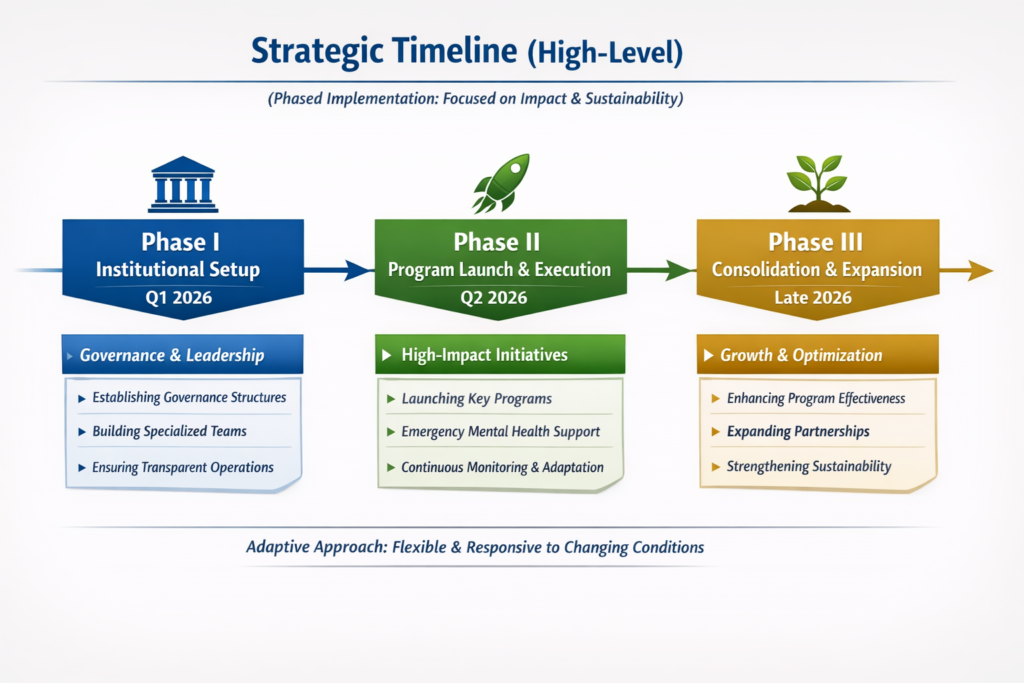
Strategic Timeline:
This timeline provides donors and stakeholders with a clear understanding of how the Society sequences, prioritizes, and adapts its initiatives over time. It emphasizes strategic thinking, organizational readiness, and operational adaptability while safeguarding sensitive operational details.
Phased Implementation
Phase I – Institutional Setup (Q1 2026)
Establishment and activation of governance structures and executive leadership.
Formation of specialized technical and operational teams to ensure program readiness.
Implementation of internal management, accountability, and reporting mechanisms to guarantee transparent operations.
Phase II – Program Launch & Execution (Q2 2026)
Rollout of prioritized psychological and developmental initiatives, focusing on high-impact interventions.
Launch of targeted emergency mental health programs to address urgent needs of vulnerable populations.
Continuous monitoring and adaptive feedback loops to ensure responsiveness and effectiveness.
Phase III – Consolidation, Expansion & Optimization (Late 2026)
Refinement of programs based on field evidence, lessons learned, and community feedback.
Development of strategic partnerships and resource mobilization to ensure sustainability.
Institutional strengthening through capacity building, operational excellence, and governance reinforcement.
Adaptive Planning: All timelines remain flexible and responsive to changing security, political, and operational conditions, ensuring resilience and continuity of services.
Operating in Complex & High-Risk Environments
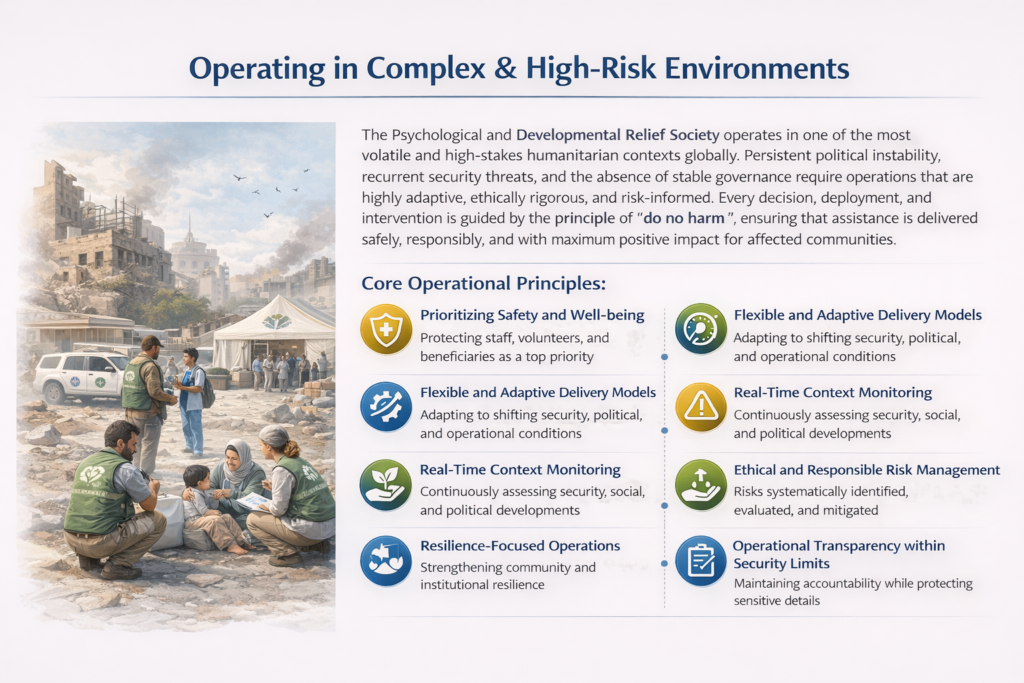
The Psychological and Developmental Relief Society operates in one of the most volatile and high-stakes humanitarian contexts globally. Persistent political instability, recurrent security threats, and the absence of stable governance require operations that are highly adaptive, ethically rigorous, and risk-informed. Every decision, deployment, and intervention is guided by the principle of “do no harm”, ensuring that assistance is delivered safely, responsibly, and with maximum positive impact for affected communities.
Core Operational Principles:
Prioritizing Safety and Well-being: The protection of staff, volunteers, and beneficiaries is paramount. Safety considerations are embedded into all programmatic and operational decisions.
Flexible and Adaptive Delivery Models: Programs are designed to respond dynamically to shifting security, political, and operational conditions, maintaining continuity of support even under disruption.
Real-Time Context Monitoring: Security, social, and political developments are continuously assessed to inform timely and evidence-based operational adjustments.
Ethical and Responsible Risk Management: Risks are systematically identified, evaluated, and mitigated. Decision-making balances the urgency of humanitarian need with ethical responsibility and safety imperatives.
Resilience-Focused Operations: Interventions are structured to strengthen community and institutional resilience, ensuring benefits extend beyond immediate relief and contribute to long-term stability.
Operational Transparency within Security Limits: While sensitive details are protected to ensure safety and program integrity, reporting, accountability, and stakeholder engagement are maintained at the highest professional standards.
What Success Looks Like
At the Psychological and Developmental Relief Society, success is measured not by the number of activities implemented, but by the quality, sustainability, and ethical integrity of the impact we create. True success is realized when individuals and communities achieve lasting psychological stability, resilience, and human dignity, reflecting both immediate relief and long-term developmental progress.
Key Indicators of Success
🌿 Enhanced Psychological Stability
Tangible improvements in mental health and emotional well-being, particularly for children, women, and vulnerable populations affected by conflict.
🏘 Strengthened Community Resilience
Communities acquire knowledge, coping strategies, and support networks that enable them to withstand future crises and adapt to challenging circumstances.
🛡 Ethical, Transparent Service Delivery
All programs are implemented responsibly, inclusively, and with accountability, ensuring respect for the dignity and rights of every beneficiary.
🤝 Institutional Credibility & Trust
The Society is recognized by stakeholders, beneficiaries, and donors as a principled, capable, and dependable organization, committed to ethical humanitarian action and measurable impact.
Strategic Transparency Statement
The Psychological and Developmental Relief Society is deeply committed to transparency in all its operations. However, in volatile contexts, certain operational specifics, timelines, and locations are intentionally generalized to protect beneficiaries, staff, and the integrity of our programs.
Transparency is maintained through:
Regular Reporting: Timely updates on activities, outcomes, and resource utilization.
Accountable Governance: Oversight mechanisms that ensure ethical and responsible decision-making.
Stakeholder Engagement: Open communication with donors, partners, and communities to foster trust, collaboration, and mutual understanding.
By balancing openness with operational security, the Society ensures that its work remains both ethically responsible and effectively impactful.